

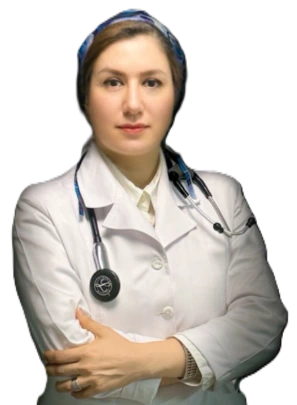
Dr. Mahboobeh Sheikh, MD
Cardiologist | Advanced Echocardiography Fellow | Assistant Professor of Cardiology
Professional Highlights
-
-
- Faculty Member, University Medical School
- Member, American Society of Echocardiography (ASE)
- Member, Iranian Society of Cardiology
- Member, Iranian Society of Echocardiography
- Outstanding Physician Award Recipient (2017, 2021)
- Mentor to More Than 300 Cardiology Specialists
- Performed More Than 5,000 Echocardiographic Examinations
- Assistant Professor of Cardiology, Zabol University of Medical Sciences
- Board-Certified Cardiologist and Advanced Echocardiography Fellow
-
Areas of Expertise
-
-
- General Cardiology
- Advanced Echocardiography
- Stress Echocardiography
- Transesophageal Echocardiography (TEE)
- Cardiovascular Prevention
- Heart Failure Assessment
- Valvular Heart Disease
- Cardiovascular Imaging
- Artificial Intelligence in Echocardiography
-
Professional Experience
-
-
- Amir-Al-Momenin Hospital
Cardiologist
January 2015 – Present - Tehran Heart Center
Cardiology Specialist Attending
January 2013 – 2020 - Zabol University of Medical Sciences
Assistant Professor of Cardiology, Specialist Attending
January 2015 – Present
- Amir-Al-Momenin Hospital
-
Education
-
-
- Advanced Echocardiography Fellowship
Tehran Heart Center, Tehran University of Medical Sciences
2022 – Present - Cardiology Residency
Tehran University of Medical Sciences
2010 – 2014 - Doctor of Medicine (MD)
Shahid Beheshti University of Medical Sciences
2000 – 2007
- Advanced Echocardiography Fellowship
-
Research Profiles
Selected Publications
-
-
- M. Sheikh · M. Tajdini1 · A. Shafiee MSAAJHPAA. Association of serum gamma-glutamyltransferase and premature coronary artery disease. Neth Heart J. 2017. 3.
- Mahboobeh Sheikh PO. The Prevalence of Vitamin D Deficiency among Iranian Patients with Ischemic Heart Disease: A Systematic Review and Meta-analysis. INTERNATIONAL JOURNAL OF CURRENT RESEARCH IN CHEMISTRY AND PHARMACEUTICAL SCIENCES. 2022;9(7).
- Mahboobeh Sheykh POMRHKR-EZM. Evaluation of Gender Differences in the Prevalence of Coronary Risk Factors in Patients with Acute Intractable Syndrome Hospitalized in CCU of Amiralmomenin Hospital, Zabol. Research J Pharm and Tech. 2017;10(9):2883-6.
- Mahboube Sheikh BSFPO. Knowledge and attitude toward risk factors of cardiovascular disease in the Iranian population: A systematic review. International Journal of Current Research in Medical Sciences. 2018;4(12).
- Mahmoodi Z, Salarzaei M, Sheikh M. Prosthetic vascular graft infection: A systematic review and meta-analysis on diagnostic accuracy of 18FDG PET/CT. General thoracic and cardiovascular surgery. 2021:pages219-29.
- Moghadam MN, Amirian S, Afshari M, Parooie F, Keikhaie KR, Shahramian I, et al. Hepatitis B vertical transmission and its risk factors among pregnant women in eastern Iran. Медичні перспективи.2022;27(1):123-31.
- Ostadrahimi P, Sheikh M, Safaryzadeh E. Acute hemorrhagic edema of infancy. Вопросы практической педиатрии. 2022;17(2):164-6.
- Sahebjam M. A devastating complication of Prosthetic Aortic Valve Infective Endocarditis; Aortoventricular fistula with periaortic abscess presenting with complete heart block. Authorea Preprints. 2023.
- Shafiee A, Sheikh M, Amirzadegan A, Salarifar M, editors. ASSOCIATION OF SERUM GAMMAGLUTAMYL TRANSFERASE AND PREMATURE CORONARY ARTERY DISEASE 2015: KARGER ALLSCHWILERSTRASSE 10, CH-4009 BASEL, SWITZERLAND.
- Shahramian I, Moradi A, Ostadrahimi P, Mirzaei H, Sheikh M, Bonjar AK, et al. Serological Features of Children Vertically Infected With Hepatitis B Virus: A Study in Amir Al-Momenin Ali Hospital of Zabol. International Journal of Basic Science in Medicine. 2021;6(1):25-9.
- Shahramian I, Ostadrahimi P, Sheikh M, Nazari S, Mirzarie H, Moradi A, et al. Evaluation of S Gene Mutations in Children with Maternally Transmitted Hepatitis B. Journal of Advances in Medical and Biomedical Research. 2023;31(144):57-63.
- Sheikh M, Mahabadi BS, Ostadrahimi P. Prevalence of addiction in Iranian myocardial infarction patients: a systematic review and meta-analysis. Int J Curr Res Biol Med. 2018;3(12):47-52.
- Sheikh M, Mahabadi BS, Ostadrahimi P. Infective endocarditis in Iranian children: A systematic review and meta-analysis in three age groups. Int J Adv Res Biol Sci. 2019;6(5):110-7.
- Sheikh M, Mahabadi BS, Ostadrahimi P. Prevalence of Renal artery stenosis in Iranian patients with coronary artery disease: A systematic review and meta-analysis. Int J Curr Res Med Sci. 2019;5(1):8-14.
- Sheikh M, Ostadrahimi P. PREVALENCE OF CONGENITAL HEART DEFECTS IN IRANIAN CHILDREN WITH DOWN’S SYNDROME: A SYSTEMATIC REVIEW AND META-ANALYSIS. International Journal of Pharmaceutical and Biological Science Archive. 2019.
- Sheikh M, Ostadrahimi P. PREVALENCE OF ASD AND VSD IN IRANIAN CHILDREN WITH CONGENITAL HEART DEFECT: A SYSTEMATIC REVIEW AND META-ANALYSIS. International Journal of Pharmaceutical and Biological Science Archive. 2019.
- Sheikh M, Ostadrahimi P. Cardiovascular Malformations in Iranian Infants of Diabetic Mothers: A systematic review and meta-analysis. Int J Curr Res Med Sci. 2020;6(6):26-32.
- Sheikh M, Ostadrahimi P. Associated heart malformations in Iranian newborns with imperforate anus: A systematic review and meta-analysis. Int J Curr Res Med Sci. 2020;6(12):19-26.
- Sheikh M, Ostadrahimi P. Ultrasound for early diagnosis of intra-abdominal involvement in children with Henoch–Schönlein purpura: A retrospective study. UNIVERSA MEDICINA. 2022;41.
- Sheikh M, Ostadrahimi P. The Prevalence of Vitamin D Deficiency among Iranian Patients with Ischemic Heart Disease: A Systematic Review and Meta-analysis. Int J Curr Res Chem Pharm Sci. 2022;9(7):8-14.
- Sheikh M, Ostadrahimi P. Coronary Artery Disease and The Prevalence of Opium Consumption: A Systematic Review and Meta-analysis in the Iranian Population. Int J Curr Res Chem Pharm Sci. 2022;9(8):23-30.
- Sheikh M, Ostadrahimi P. The association between fatty liver and coronary artery disease: a systematic review and meta-analysis among the Iranian population. Int J Curr Res Med Sci. 2022;8(8):11-8.
- Sheikh M, Ostadrahimi P. Wpływ fototerapii na stężenie wapnia i bilirubiny u noworodków: porównanie pacjentów z niskim i prawidłowym stężeniem G6PD. Pediatria i Medycyna Rodzinna (Paediatrics & Family Medicine). 2023;19(1).
- Sheikh M, Ostadrahimi P. The effect of phototherapy on neonatal calcium and bilirubin levels: a comparison between patients with low and normal G6PD levels. 2023.
- Sheikh M, Ostadrahimi P. The association of HbA1C and cTnI with mortality and severity of disease among patients with acute coronary syndrome. International Journal of Diabetes in Developing Countries. 2023:1-6.
- Sheikh M, Ostadrahimi P, Salarzaei M, Parooie F. Cardiac complications in pregnancy: a systematic review and meta-analysis of diagnostic accuracy of BNP and N-terminal pro-BNP. Cardiology and Therapy. 2021;10:501-14.
- Sheikh M, Ostadrahimi P, Shahraki E. Evaluation of in-hospital Mortality of Acute Coronary Syndrome Based on Blood Glucose at Admission. Journal of Diabetes Nursing. 2021;9(2):1408-18.
- Sheikh M, Rahimi PO. The prevalence of AKI in Iranian children with CHD: A Systematic Review and Meta-analysis. Int J Adv Res Biol Sci. 2022;9(5):58-64.
-
🔵Biography
🔷Chapter One: Born in Isfahan — The Beginning of a Physician’s Journey
Dr. Mahboobeh Sheikh was born in the historic city of Isfahan, a place where culture, beauty, and tranquility converge. Although her family’s roots trace back to Tehran, where generations of her relatives had lived, her father’s work at the Isfahan Steel Company brought the family to Isfahan for several years. Their modest home in the Bozorgmehr neighborhood became the setting in which both her character and her future vocation began to take shape.
From an early age, she displayed a calm temperament, deep empathy, and an unusual sensitivity to the emotions of others. Whenever disagreements arose at home, she would quietly ask, “Why are you upset? How can we make it better?” This instinctive concern for human suffering would later become one of the defining qualities of her medical career. Among his three children, her father held a special affection for her, while her relationship with her mother—a teacher—was built upon mutual respect, affection, and a lifelong love of learning.
🔷Chapter Two: Childhood — Play, Imagination, and the First Signs of a Calling
As a child, Dr. Sheikh loved imaginative role-playing games. Yet unlike many children, she was drawn not to adventurous or fantastical characters, but to the roles of teacher and mother—roles centered on listening, understanding, guiding, and comforting others. These simple childhood games became early rehearsals for the life she would eventually embrace.
During middle school, she became a badminton champion, demonstrating determination, discipline, and athletic ability. Alongside sports, she nurtured another passion: music. For years, she dreamed of learning the piano but never had the opportunity. In recent years, she finally fulfilled that childhood aspiration and began playing the piano—a pursuit that serves not only as a creative outlet, but also as a source of reflection and inner peace.
🔷Chapter Three: School Years — Talent, Curiosity, and Confidence
Dr. Sheikh attended Roshangar High School in Tehran, one of the city’s most respected and academically demanding schools. In this competitive environment, she did far more than keep pace with her peers—she excelled.
In anatomy classes, while many students felt uneasy at the sight of blood, she approached dissections with curiosity, confidence, and precision, fascinated by the complexity of biological structures. Her teachers often remarked, “She doesn’t merely study the world—she seeks to understand it.”
Her analytical abilities extended beyond the sciences. In mathematics, she frequently outperformed even friends who specialized in the subject. Her mathematics teachers often observed, “Mahboubeh thinks independently. She never settles for superficial understanding. She analyzes rather than imitates.”
🔷Chapter Four: Choosing Medicine — A Decision Guided by Purpose
At a time when many students pursued medicine primarily for financial security, her father encouraged her to study dentistry. Dr. Sheikh respectfully disagreed.
“Dentistry will not fulfill me,” she explained. “I want to become a physician.”
Her academic performance would have allowed her to enter virtually any university program she desired. Yet her decision was driven neither by prestige nor financial considerations. She chose medicine because it aligned with her strengths—a remarkable memory, strong analytical thinking, and a deep fascination with the human body—and, most importantly. After all, it offered a meaningful way to help others.
🔷Chapter Five: Medical School — Scientific and Personal Growth
Dr. Sheikh entered the Faculty of Medicine at the Shahid Beheshti University of Medical Sciences. Her years as a medical student became a period of profound intellectual and personal development.
She discovered that medicine is not merely a scientific discipline; it is a responsibility. Patients are not case files, but human beings. Diagnosis is not only a skill, but an expression of precision, judgment, and commitment.
Alongside her medical education, she participated in the EDS program, an academic track comparable to a bachelor-level education in health systems management. This experience expanded her perspective far beyond individual patient care. She studied healthcare policy, hospital administration, health economics, insurance systems, pharmaceutical policy, and the structural challenges facing healthcare systems at a national level.
For Dr. Sheikh, this was more than an additional qualification—it was an introduction to the broader forces that shape the health of entire populations. It transformed her understanding of medicine from a purely clinical profession into a vital component of a complex and interconnected healthcare system.
She has often reflected that this education helped her appreciate the physician’s role beyond the examination room. Understanding insurance structures, healthcare policies, and systemic challenges enables physicians to deliver care that is not only effective but also equitable. The program cultivated a systems-oriented mindset that continues to influence her teaching, decision-making, and patient care today.
🔷Chapter Six: Cardiology — Entering the World of the Human Heart
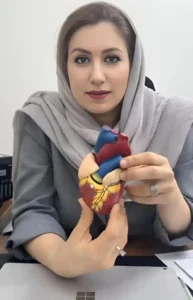
To Dr. Mahboubeh Sheikh, the heart is far more than a vital organ. It is the living center of human existence and the point at which science and humanity intersect. She often says that the heart speaks its own language and that a skilled physician can recognize its warnings long before disease progresses to catastrophe.
From her earliest years in medicine, she was captivated by the heart’s extraordinary complexity, its elegant physiology, and its profound influence on human life. Each time she listened to a heartbeat through a stethoscope or observed the movement of cardiac valves during training, she felt she was encountering a world governed simultaneously by precision and mystery—a world that demanded both intellectual rigor and humility.
Her fascination with cardiology emerged from these formative experiences. She saw how a subtle change in rhythm, a minor abnormality in wall motion, or a small disruption in blood flow could alter the course of a person’s life. To her, the heart is an organ that rarely conceals the truth; it invites the physician to read its messages with patience, knowledge, and care.
This perspective ultimately led her to pursue cardiology and later advanced echocardiography, a field that allows physicians not only to listen to the heart, but to visualize it, understand it, and reveal its hidden stories. For Dr. Sheikh, the heart is where science, experience, and compassion converge.
In 2010, she entered the cardiology residency program at the Tehran University of Medical Sciences. At the same time, she began her clinical work at the renowned Tehran Heart Center, one of the leading cardiovascular institutions in the Middle East.
There, she encountered some of the most challenging and complex cardiac cases, worked alongside distinguished mentors, and refined her diagnostic abilities to an advanced level. Her seven years at Tehran Heart Center were far more than a period of training—they were an education in medicine, judgment, and life itself.
🔷Chapter Seven: Academic Leadership — Educating the Next Generation
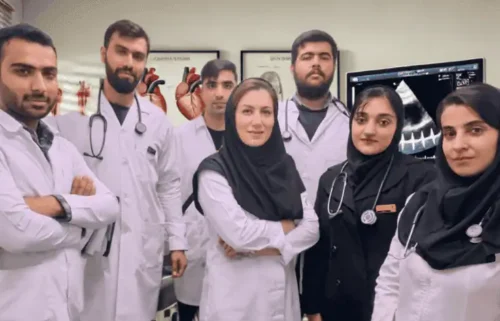
After completing her cardiology training, Dr. Sheikh joined academia as a faculty member. Over the years, she has trained more than 300 cardiologists, contributed to educational program development, and shared her extensive clinical experience with future generations of physicians.
For her, teaching is not simply the transmission of knowledge. It is a professional responsibility, an opportunity to continually refine the communication of scientific concepts, and a means of understanding how learners develop the ability to grasp the complexities of medicine.
She believes that medical education extends far beyond hospital wards and examination rooms. Future physicians must be exposed to a wide range of disciplines if they are to understand both science and humanity fully. In her view, medical students and residents should become familiar with research software, data analysis, and digital tools that enhance clinical understanding. Technological literacy is no longer optional; it is an essential component of modern medical professionalism.
Dr. Sheikh has consistently encouraged her trainees to develop at least a basic understanding of computer programming—not necessarily to become software engineers, but to appreciate the logic underlying algorithms, data structures, and modern diagnostic technologies. She believes that physicians who engage with technology, analytics, and computational thinking cultivate broader and more adaptable minds.
For this reason, her educational approach often includes exposure to statistical software, data analysis methodologies, and programming languages such as Python and R. She views these activities not merely as technical skills, but as a form of intellectual renewal—an opportunity to engage different cognitive capacities and develop new ways of thinking. In her view, an exceptional physician understands both medicine and technology and can build meaningful bridges between them for the benefit of patients.
🔷Chapter Eight: Advanced Echocardiography — Precision, Visualization, and Diagnosis
In 2021, Dr. Sheikh pursued advanced fellowship training in echocardiography to master the most sophisticated methods available for diagnosing cardiovascular disease. During this period, she acquired expertise in state-of-the-art cardiac imaging techniques while continuing much of her clinical work at Tehran Heart Center. For Dr. Sheikh, echocardiography is more than a diagnostic tool—it is a language through which the heart communicates.
Advanced echocardiography provides a unique window into the human heart, allowing physicians to observe its structure and function with remarkable precision. She considers it one of the great achievements of modern medicine: a non-invasive technology capable of revealing extraordinary details without surgery or physical intrusion.
The evolution of three-dimensional imaging, four-dimensional imaging, and myocardial strain analysis represents, in her view, not merely technological progress but a profound expansion of clinical understanding. These innovations enable physicians to identify disease at its earliest stages, often before symptoms emerge or complications develop.
Dr. Sheikh often describes advanced echocardiography as “the physician’s third eye”—a means of making therapeutic decisions with greater accuracy, confidence, and compassion. She regards it as one of the most powerful drivers of effective diagnosis and treatment because it provides deep insight into cardiac function while imposing minimal burden on the patient.
To her, advanced echocardiography is more than technology. It is a bridge between science and humanity, between precision and empathy, and between diagnosis and hope. It has become an integral part of her professional identity and a daily reminder that medicine is, at its core, the art of seeing clearly and understanding deeply.
🔷Chapter Nine: Motherhood During Fellowship — The Most Demanding Challenge
The years of advanced subspecialty training brought challenges that extended far beyond academics and clinical practice. During this period, Dr. Sheikh also became a mother.
Balancing pregnancy, intensive medical training, hospital duties, overnight calls, and the responsibilities of parenthood would have seemed impossible to many. Yet she navigated this demanding chapter with determination, patience, and unwavering devotion.
After long days at the hospital, she would return home exhausted, yet still dedicate two to three hours exclusively to her child—playing, drawing, walking, talking, and simply being present.
Among the many accomplishments of her life, these quiet moments remain some of the most meaningful. They reflect not only professional resilience but also the values that have shaped her both as a physician and as a human being.
🔷Chapter Ten: Challenging Cases — Where Precision and Humanity Meet
Throughout her career, Dr. Mahboubeh Sheikh has encountered many patients whose diagnoses were anything but straightforward. These complex cases have reinforced her belief that medicine requires not only scientific knowledge but also careful observation, critical thinking, and a genuine understanding of human behavior.
One particularly memorable case involved a hospitalized patient whose condition remained puzzling despite extensive evaluation. Through attentive observation of subtle clinical signs and inconsistencies in the patient’s presentation, Dr. Sheikh became convinced that an important piece of the story was missing. Her persistence ultimately revealed that the patient had been secretly using illicit substances during hospitalization. It was not a dramatic breakthrough, but rather a testament to the value of careful clinical judgment and attention to detail.
Patients who pursue unconventional or pseudoscientific treatments have always interested her—not from a place of judgment, but from scientific curiosity and human understanding. She believes that every decision a patient makes reflects a story, a fear, a hope, or a misunderstanding that deserves to be understood before it is corrected.
On numerous occasions, patients have sought medical clearance for cosmetic procedures only to discover that the true threat to their health lay elsewhere. More than once, a seemingly healthy individual preparing for elective cosmetic surgery was found, after a careful cardiovascular evaluation, to have severe coronary artery disease that placed their life at immediate risk.
These are the moments that define medicine for Dr. Sheikh. They are reminders that behind every routine consultation lies the possibility of changing—or even saving—a life.
🔷Chapter Eleven: Technology, Artificial Intelligence, and Education — A Physician Looking Toward the Future
Unlike many traditionally trained academics, Dr. Sheikh has maintained a deep and enduring interest in technology. She believes that modern physicians must cultivate multidimensional thinking and continuously adapt to emerging scientific advances.
Throughout her years of teaching, she has encouraged residents and fellows to move beyond memorization and develop genuine analytical skills. Her trainees have been expected not only to learn statistical software such as SPSS, but also to explore programming languages, including Python and R. More importantly, she has encouraged them to understand the principles behind algorithms rather than simply learning how to operate software.
She frequently emphasizes that stepping away from purely clinical thinking can be intellectually restorative. Engaging with data analysis, programming, and mathematical reasoning allows physicians to exercise different aspects of cognition and develop a deeper understanding of the tools that increasingly shape modern medicine.
In her view, understanding the logic behind computational models is essential. Physicians should not merely use advanced technologies; they should understand how those technologies work, how they are built, and how they can be improved.
This philosophy extends to the rapidly evolving field of artificial intelligence. Dr. Sheikh has authored several scientific publications exploring the application of artificial intelligence in echocardiography and cardiovascular imaging. She encourages young physicians not to treat AI systems as mysterious black boxes, but rather to understand the mathematical and computational principles that drive them.
Her perspective is rooted in a simple belief: physicians who understand both medicine and technology will be better equipped to shape the future of healthcare.
In this regard, she represents a rare combination of qualities—a physician who respects the foundations of medicine, embraces the realities of the present, and actively prepares for the future.
🔷Chapter Twelve: Character and Values — Patience, Kindness, and Integrity
If Dr. Mahboubeh Sheikh’s character could be summarized in three words, they would be: patience, kindness, and integrity.
These qualities are evident not only in her interactions with patients and colleagues, but also in the way she approaches life itself. She speaks honestly and directly, yet always with compassion. She listens carefully, treats others with respect, and consistently seeks ways to help those around her.
Her colleagues often describe her as someone who combines professional rigor with genuine warmth—a physician whose commitment to excellence never comes at the expense of humanity.
For Dr. Sheikh, medicine has never been solely about diagnosing disease or performing procedures. It is fundamentally about serving people, understanding their concerns, and guiding them through some of the most vulnerable moments of their lives.
🔷Chapter Thirteen: Professional Authority and Human-Centered Care — Two Sides of the Same Truth
In Dr. Sheikh’s view, a physician’s authority is not established by creating distance from patients, but by building meaningful connections with them.
She believes that before medicine becomes a sophisticated science, it is an art—the art of understanding people, listening carefully, observing, and accompanying patients through uncertainty and illness.
Her professional authority has never relied upon formality, hierarchy, or the barriers that sometimes separate physicians from those they serve. Rather, it arises from something deeper: knowledge, experience, diagnostic precision, and personal integrity.
Dr. Sheikh does not think of herself primarily as a physician-scientist or a physician-educator, although she has excelled in both roles. Above all, she considers herself a human-centered physician—someone who pursues scientific excellence in the service of people, never the other way around.
For this reason, she has never viewed the personal aspects of her story as separate from her professional identity. She believes that trust is not built through status or appearances. It is built through honesty, transparency, competence, and humanity.
This biography, with all of its personal and professional dimensions, is therefore not a departure from her professional image but a fuller expression of it. It portrays a physician who understands science, appreciates the complexity of human experience, and seeks to build a bridge between the two.
That bridge is trust.
In keeping with this human-centered philosophy, Dr. Sheikh has spent many years reflecting on a fundamental question: What makes a good physician? Throughout her career, she has explored this question through clinical practice, teaching, conversations with colleagues, and encounters with countless patients.
These reflections ultimately led to the development of a comprehensive article examining the meaning and responsibilities of being a truly good physician. Grounded not in abstract theory but in real-world experience, the article explores the values, principles, and responsibilities that define excellence in medical practice.
Published on her official website, it offers readers a deeper understanding of the philosophy that guides her work. In many ways, it serves as a natural continuation of this biography, illustrating how the values that shaped her from childhood have evolved into a coherent and enduring professional vision.
For Dr. Mahboubeh Sheikh, medicine has always been, before anything else, the art of seeing the human being behind the patient.
🔵Epilogue: A Life Dedicated to the Heart
Today, Dr. Mahboubeh Sheikh stands at the intersection of clinical excellence, academic leadership, and technological innovation. As a cardiologist, advanced echocardiography specialist, educator, researcher, and mother, she has devoted her life to understanding one of the most remarkable organs in the human body—and to caring for the people whose lives depend upon it.
Her journey from a curious child in Isfahan to a respected physician and educator has been shaped by a consistent set of values: intellectual curiosity, compassion, integrity, and an unwavering commitment to lifelong learning. Whether diagnosing a complex cardiac condition, mentoring the next generation of physicians, advancing the application of artificial intelligence in cardiovascular medicine, or simply listening to a patient’s concerns, she approaches each responsibility with the same sense of purpose.
Throughout her career, Dr. Sheikh has remained convinced that the future of medicine lies not in choosing between science and humanity, but in bringing them closer together. Advanced technology, sophisticated imaging, and artificial intelligence can transform healthcare, but only when guided by clinical judgment, ethical responsibility, and genuine concern for the individual patient.
Her professional philosophy can perhaps be summarized in a single belief: the best medicine is practiced when knowledge is matched by empathy, and expertise is balanced by understanding.
For Dr. Mahboubeh Sheikh, the heart is more than an organ to be studied or treated. It is a reminder of the profound connection between science and human life—a connection that has guided her career from the very beginning and continues to inspire her work today.
As a physician, educator, researcher, and mentor, she remains committed to advancing cardiovascular medicine while never losing sight of the people at its center.
Because ultimately, medicine is not only about understanding the heart.
It is about understanding the human being to whom it belongs.